
Written by Max Kornetzke, Land Manager
During much of the growing season I find myself looking down along the ground, trying to see whatever I can see. Maybe I’ll get lucky and spot a diminutive wildflower others have overlooked. Maybe I’ll be blessed with a showy display attractive to winged pollinators and human admirers alike. There are so many textured details along the forest floor that captivate my imagination and keep me going outside rain or shine.
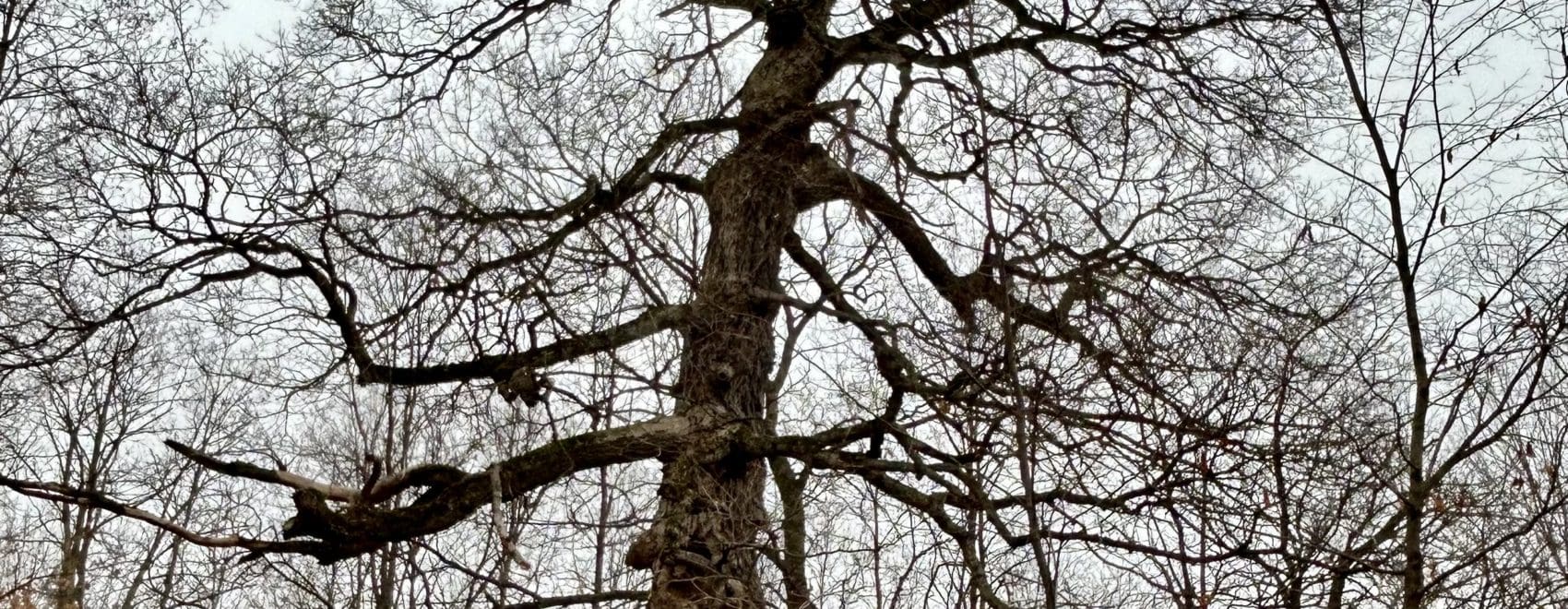
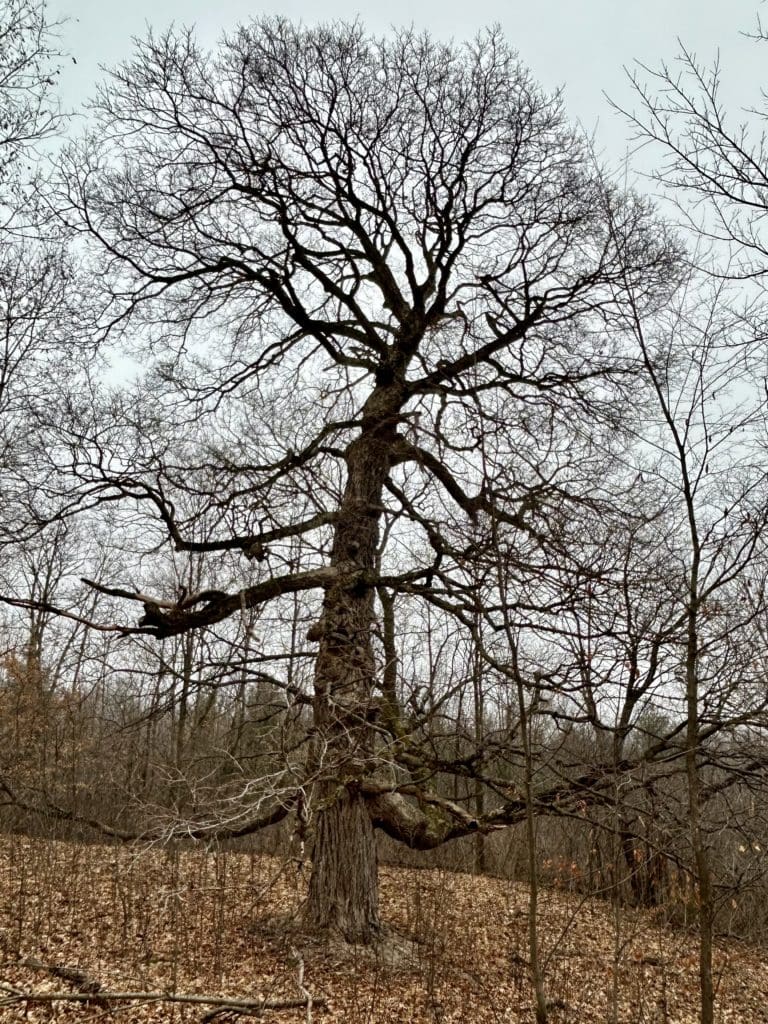
In the colder months where mossy hummocks are hidden under layers of snow, I find my eyes traveling around and up toward the sky. With the layers of branches no longer obscured by green leaves, one can really appreciate the structure of our woodland’s canopies and the many little details that might otherwise go unnoticed.
I notice the looming overstory of the older trees and the different ways they reach for the light. The direction of their limbs suggest a neighbor once stood by but has since returned to the soil. Another tree that still holds its dead lower limbs tells me this section was once more open. Nearby two trees hug, and where their limbs meet their bark has merged.
I observe the unique shapes and color of buds waiting to unfurl. There is snow-dusted lichen dripping from alternating branches and persistent, dried leaves rustling in the breeze. High above there are nooks where critters may find refuge and beyond is a dangling wasp nest I had walked by unwittingly last summer.
In one direction the forest seems to continue on forever. In the other, the illusion is broken by a more human landscape. I will continue through and see what other details the transparent winter landscape has to offer.