
Written by Kennedy Zittel, Naturalist
As I write this, the temperature gauge outside our house shows -14 degrees. I filled the bird feeders, added extra suet, and went back inside to my heated blanket. When the temperature gets this cold, it is hard to not feel bad for every animal outside. How do they stay warm without a heated blanket and mastiff to cuddle up with on the couch? Migrate, Hibernate, Adapt.
Some animals will migrate to warmer places where food is more available once it begins to get cold here. Some animals will hibernate through winter, relying on fat stored during the fall until warmer temperatures and more food arrive. Both of those methods sound good right about now! However, many animals will stay here during the winter and adapt to the cold temperatures and reduction of food sources. These adaptations can be physical or behavioral.
During winter, red foxes grow extra fur, even on their paws, to help insulate them from the cold. When they curl up, they wrap their big bushy tail around their face like a warm scarf.
Whitetail deer also grow thicker fur in the winter. Their fur is hollow, which allows air to be trapped near their body to help retain body heat (similar to how we wear insulated puffy jackets in the winter). Their skin produces an oil that makes their fur water repellent, helping to keep them dry in cold wet snow. They change their behavior too, becoming less active in winter to reduce the amount of energy they are using.
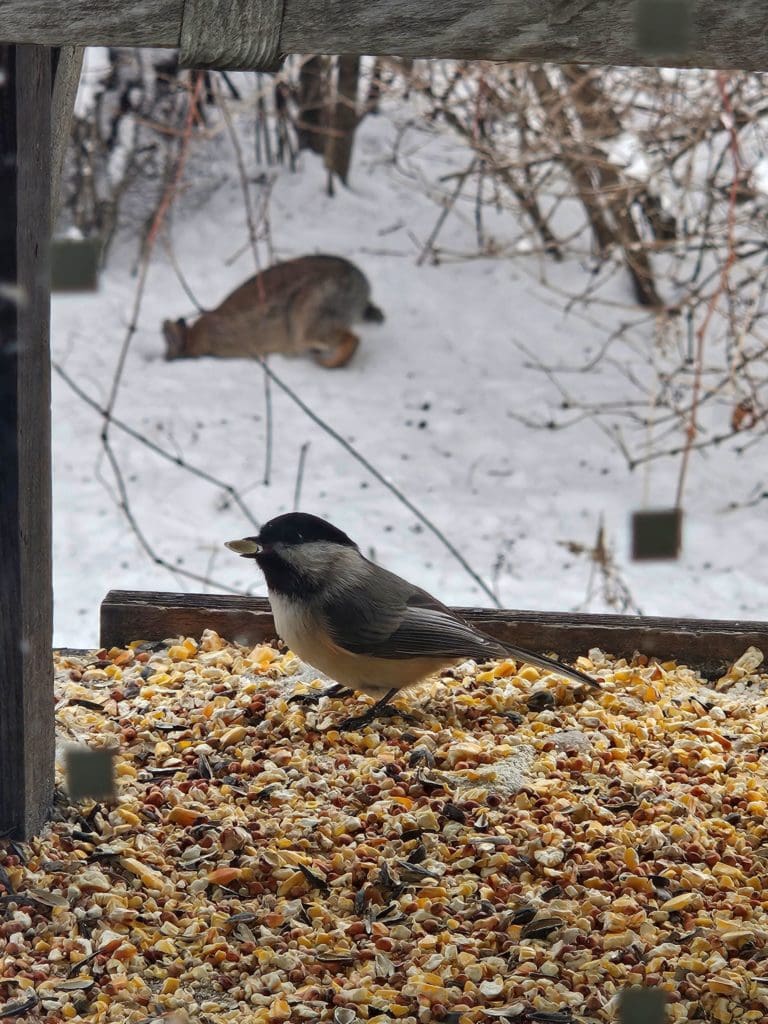
Cottontail rabbits seek shelter in brushpiles and burrows, relying on fat they built up during the fall until a warmer day comes to search for more food. They will also puff up their thick winter coat to stay warm, holding their ears flat against their back to keep them from getting too chilly.
Grey squirrels spend the fall caching food away, relying on hidden food for winter meals. During the winter, they spend less time out of their nest (called a drey) and sometimes share their space with another squirrel to help stay warm. Grey squirrels will also shiver, which sounds sad, but this helps them generate heat.
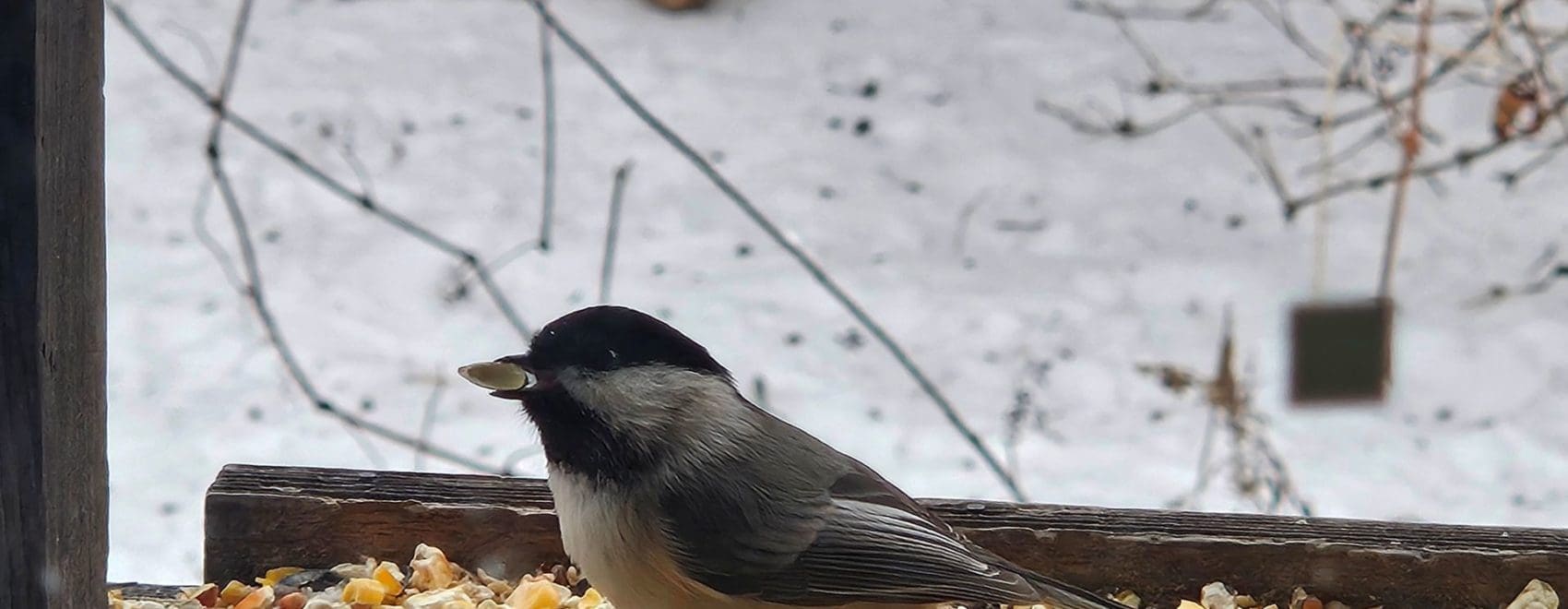
Songbirds that don’t migrate have unique adaptations as well to help survive the cold. Golden-crowned kinglets don’t use tree cavities for shelter from the cold, instead they huddle together in large groups to share body heat. Black-capped chickadees have amazing winter adaptations… they can even shrink and grow their brains! In the fall, chickadees stash food… which means they need to remember where they hid those seeds! So, the hippocampus region of their brain adds more neurons, increasing the volume by around 30%. With their new big brains, they can remember the locations of seeds they hid to gain energy on cold winter days. Once food is more abundant in spring, their brains shrink back down. Chickadees also use a technique called “regulated hypothermia” to lower their body temperature by up to 22 degrees! They reduce the temperature of their feet to just above freezing, instead of wasting heat/energy warming up further parts of their body, they focus on keeping their core warm. Chickadees will also seek shelter in tree cavities, puffing their feathers up like a warm feather jacket.
From thick winter coats to growing bigger brains, there are so many neat adaptations to allow animals here in Wisconsin to stay warm on our coldest of winter days.