Written by Kennedy Zittel, Naturalist
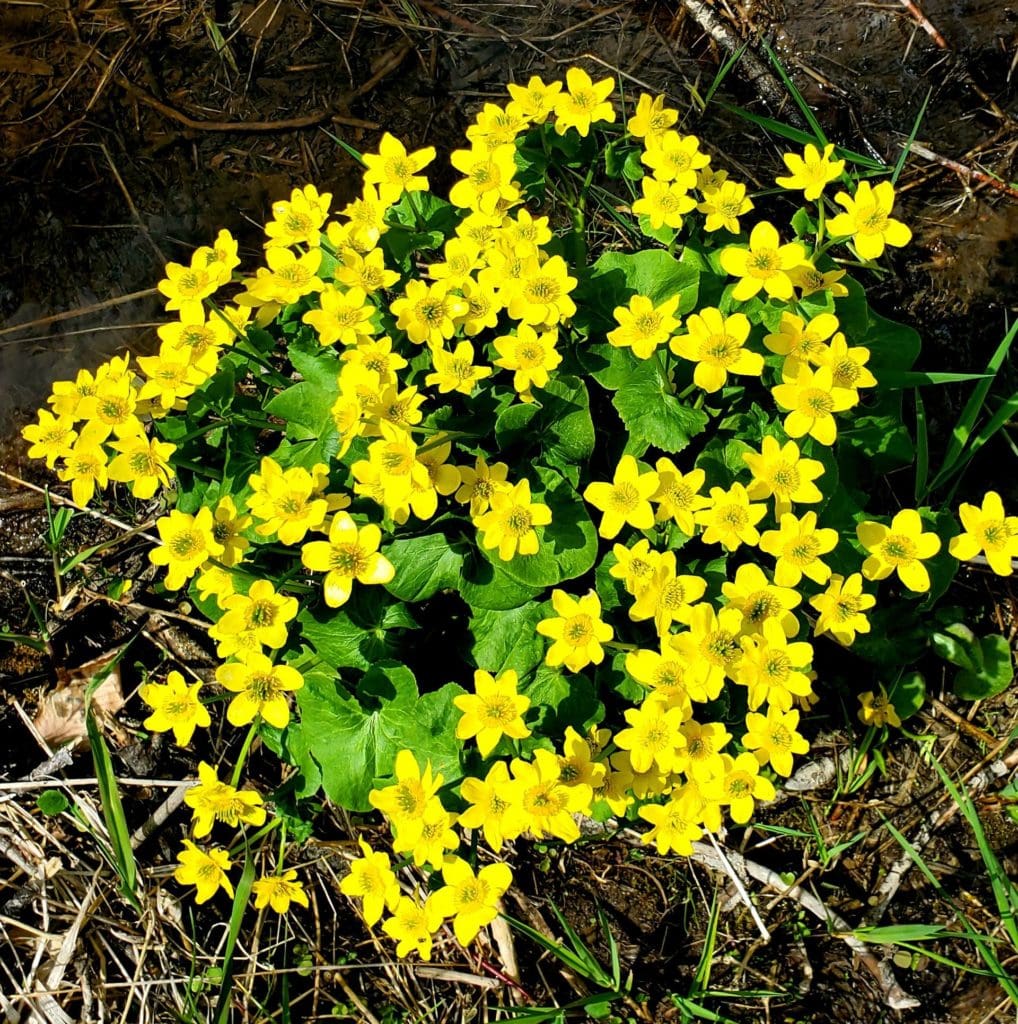
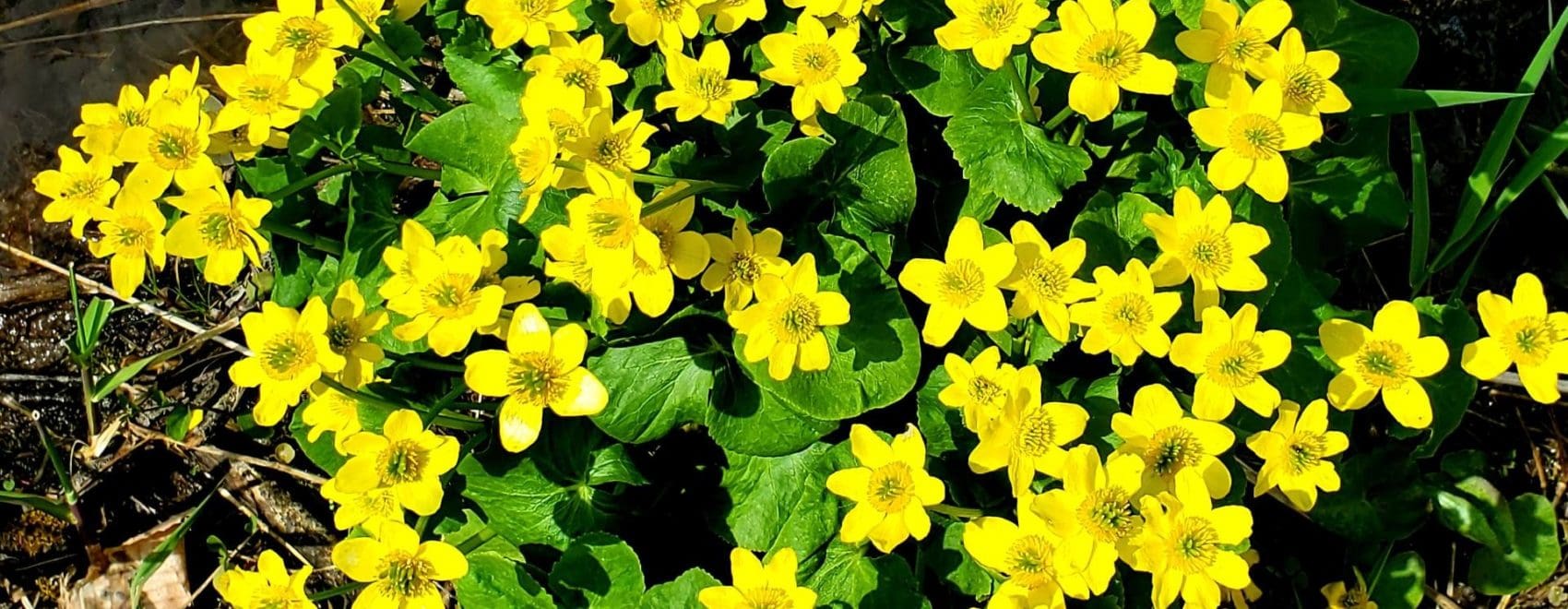
During the spring, the wet areas of the State Natural Area fill with sunshine, both literally as the weather warms and the sun shines through, but also in the bright yellow color of one of my favorite spring plants… marsh marigold. Unlike its name suggests, marsh marigold (Caltha palustris) is actually a member of the buttercup family (Ranunculaceae). However, its name isn’t totally misleading. Caltha is derived from the Ancient Greek word kálathos, meaning “goblet” referring to the shape of the flowers. Palustris is Latin for “of the marsh” indicating the habitat that it is often found growing in.
Marsh marigold can be found growing in wet habitats like marshes, swamps, and even in roadside ditches. If you would like to see this plant, walk along Black Cherry Trail or Trillium Trail as they run alongside and cross over the swales where this plant loves to grow. This plant grows along almost every Woodland Dunes Trail, just in slightly less amounts.
Because of the wet soil they grow in, they have dense and fibrous root systems that help to hold them in place which in turn reduces soil erosion in the wet habitats they are found in. Not only do they help reduce erosion, but they also help clean the water too. Their root systems and hollow stems are able to trap silt and excess nutrients, acting like a sponge to help clean the water and reduce algae buildup in wetland habitats.
This plant grows in clumps with glossy dark green heart-shaped leaves. The dense clumps of this plant provide insects and amphibian species shelter from the weather and a place to hide from predators. We talk about this plant during our Amphibmeander field trip, where students learn about wetlands and the amphibians that live in them. I remember during one of those field trips one of the students said that if they were a frog, they would love to sit under the leaves of a marsh marigold if it was raining, and I couldn’t agree more.
Around mid-April through May, the bright yellow flowers appear. Our phenology records at Woodland Dunes show that the marsh marigolds in the State Natural Area typically are in bloom around April 23rd with the weather varying their timing slightly. There are no flowers yet today, but the buds look ready to open up any day now!
Marsh marigolds are a very important pollinator food source. Their early spring flowers produce both nectar and lots of pollen that attracts many early insect pollinators. Over three dozen species of insects visit the flowers, from bees to flies, but the most common visitor is a hoverfly.
Up to 200 seeds are produced by each flower, when the follicles open, they form what is called a “splash cup”. When a drop of rain hits one, the walls are shaped in a manner that causes the seeds to be splashed out. The seeds contain spongy tissue that allows them to float on the water, helping to spread them away from the parent plant to a new location to grow.
There are so many reasons why I love this plant, from the pops of color they add to the swales to the amazing wetland services they provide – filtering water, stabilizing the soil, providing food for pollinators, and so much more! But really they are a true sign that spring is here and that warmer weather is just around the corner.