Written by Kennedy Zittel, Naturalist
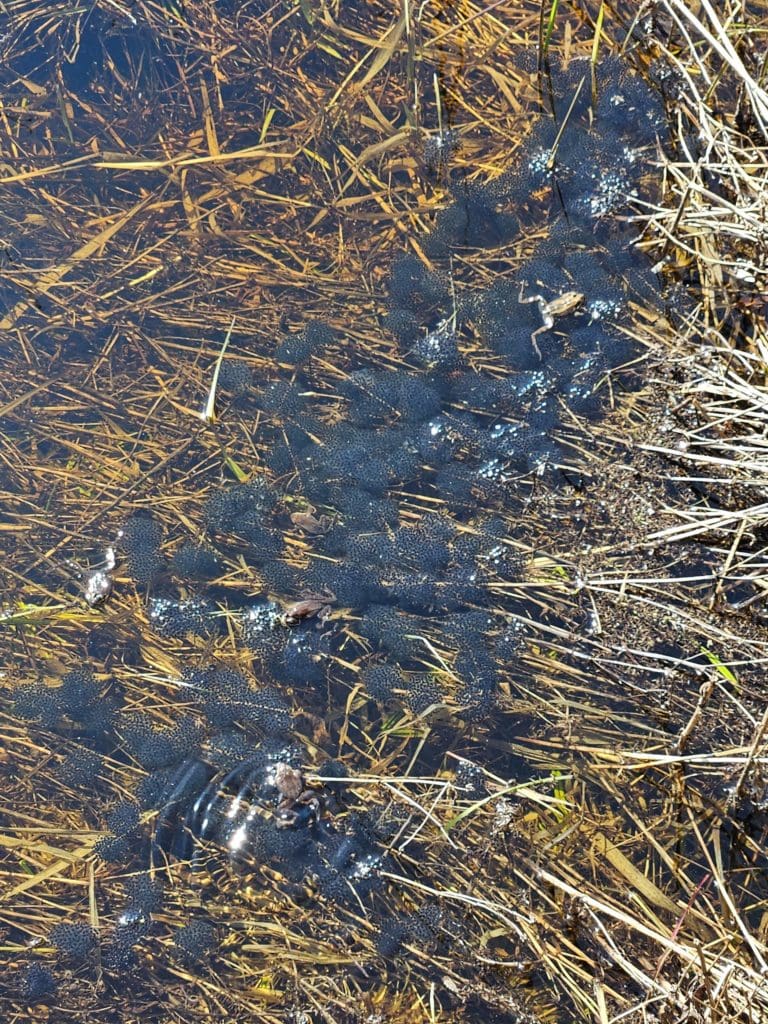
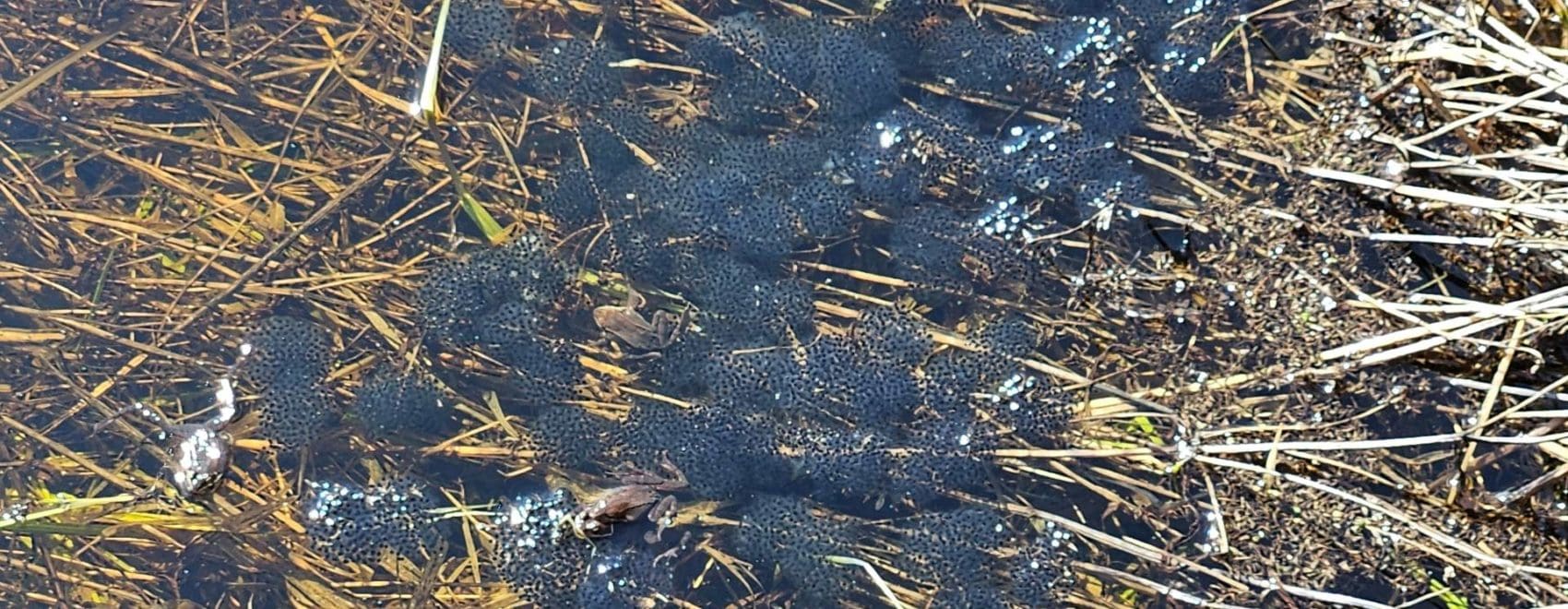
A walk down Black Cherry Trail, Trillium Trail, and the Dunes Segment of the Ice Age Trail leads you through our State Natural Area. Here you walk through a globally rare and unique habitat, our ridges and swales. Ridges are areas of high, sandy, and more upland habitat while swales are lower and wetter (hence the boardwalks you may walk over). This habitat was formed by Lake Michigan (then called Lake Nipissing) thousands of years ago – similar to how the current beach has sandbars (ridges) between lower areas (swales). During the spring, these trails offer not only sightings of spring ephemerals blooming, but also the sounds of frogs echoing through the forest. Spring peepers with their peep peep peep call, wood frogs singing “look it up look it up” and even tree frogs with their woodpecker-like calls. The other forest amphibians, salamanders, make no calls as they too search for love this time of year.
Amphibians rely on habitats like our swales and vernal pools. Vernal pools are a seasonal/temporary wetland habitat, filled with water from melting snow or rainfall that will dry up during the summer. Some of our swales remain wet all year, but some do dry up in a similar fashion. Vernal pools are also called ephemeral ponds, with their name coming from the Latin word vernalis, meaning spring.
These types of wetlands offer a special habitat for amphibians… a place where fish cannot live. These fish-free areas provide critical breeding habitat for frogs and salamanders (and invertebrates too!) with less worry of predation. In Wisconsin, all frog species and most salamander species lay their eggs in the water.
By the end of spring into early summer, there will be thousands of frogs and salamanders hatching from eggs, growing as larvae, and undergoing metamorphosis into their adult forms. As adults, they will leave the water and go into the forest until the following spring. These seasonal wetland habitats create a place for thousands of new animals to enter the world, and lure in other species too! Other species benefit from the concentrated and increased amount of amphibians, from turtles to snakes, herons to egrets, even the state threatened red-shouldered hawk visits these habitats to get a meal.
The amphibian biomass in vernal pools is higher than the biomass of animals in the surrounding forests! This just shows how critical these special habitats are for the forest ecosystem.
This spring, take a walk along one of our State Natural Area trails to enjoy the chorus of frogs singing and to see the variety of wildlife and plants that call the ridges and swales their home.